Recharge from available site input
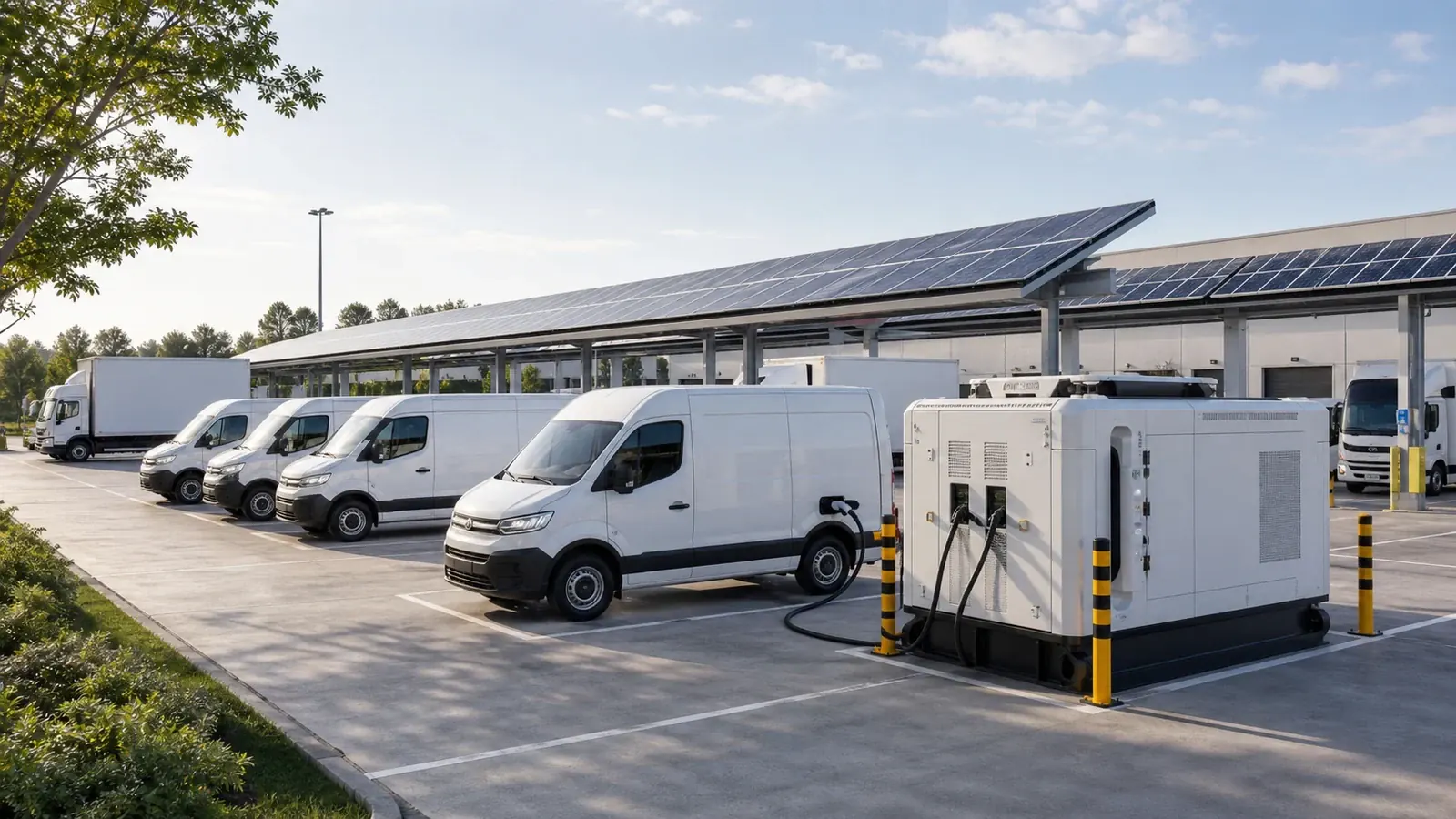
Solutions
Fleet, Depot & Mobile Energy
Add movable energy capacity for fleet charging, workshop loads and temporary depot operations.
Discuss this applicationDepot demand
Add charging positions without assuming more grid capacity.
Battery-integrated systems can recharge from the available site supply and discharge where fleet or facility demand is concentrated. This helps bridge temporary demand before permanent electrical upgrades are complete.
Z10080Z200120G186120
Typical applications
- Fleet charging
- Workshop support
- Temporary depots
- Supplemental site power
Application views
Fleet parking and depot charging examples
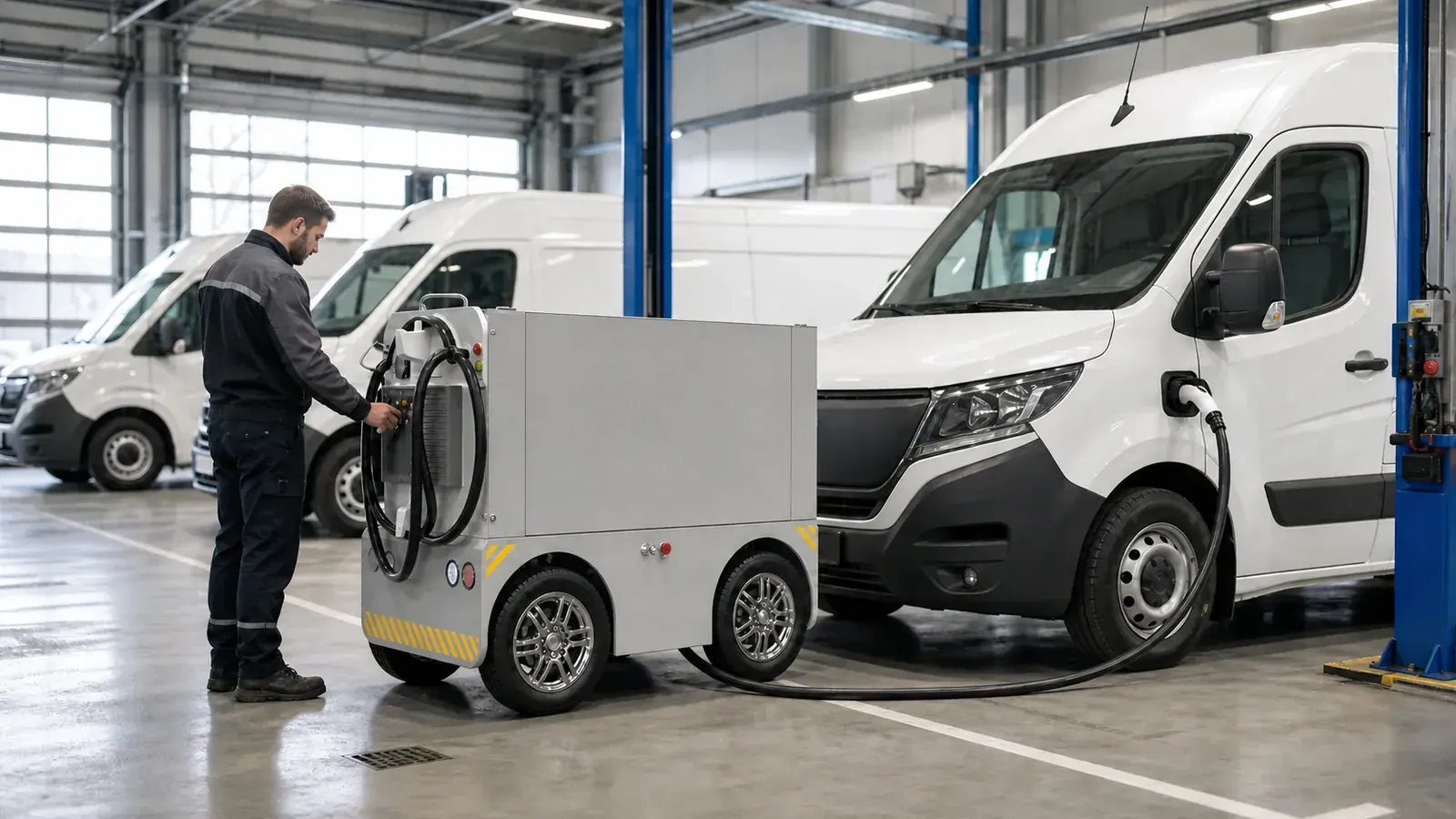
Daily charging plan
Coordinate recharge windows, movement and vehicle dwell time.
Store energy during lower-demand periods
Move capacity to the operating area
Discharge to approved vehicles or loads
Project inputs
Fleet and depot data required for quotation
- Daily energy demand
- Peak output requirement
- Available recharge power
- Connector and communications standard
Project FAQ
Size the application before selecting equipment.
Use these questions to prepare a technically useful quotation request.
What information is needed to plan fleet & depot?
Start with daily energy demand, peak output requirement, available recharge power, connector and communications standard. These inputs determine the required power, usable energy, recharge window, interface and operating method before a model is proposed.
Which MAINERAY-selected equipment can support this application?
Z10080, Z200120, G186120 are the initial equipment families to review. The final choice depends on the vehicle or load, available input, required runtime, transport route and destination-market requirements.
How are power, energy and recharge time sized?
Power in kW must cover the highest simultaneous load, while usable energy in kWh must cover the operating period. Recharge input and the available recharge window are then checked so the system can repeat the required duty cycle.